radical introductions
“Regimes of racial segregation were not disestablished because of the work of leaders and presidents and legislators but rather because of the fact that ordinary people adopted a critical stance in the way in which they perceived their relationships with reality.”
Dr. Angela Davis
On our very first episode of Radicals for Good, we give an introduction to our podcast, our host, a brief history of radicalism in Detroit, and the importance of meeting the current moment 'on the clock of the world'.
We prefer you didn’t but if you must, listen on:
Who’s in this episode?
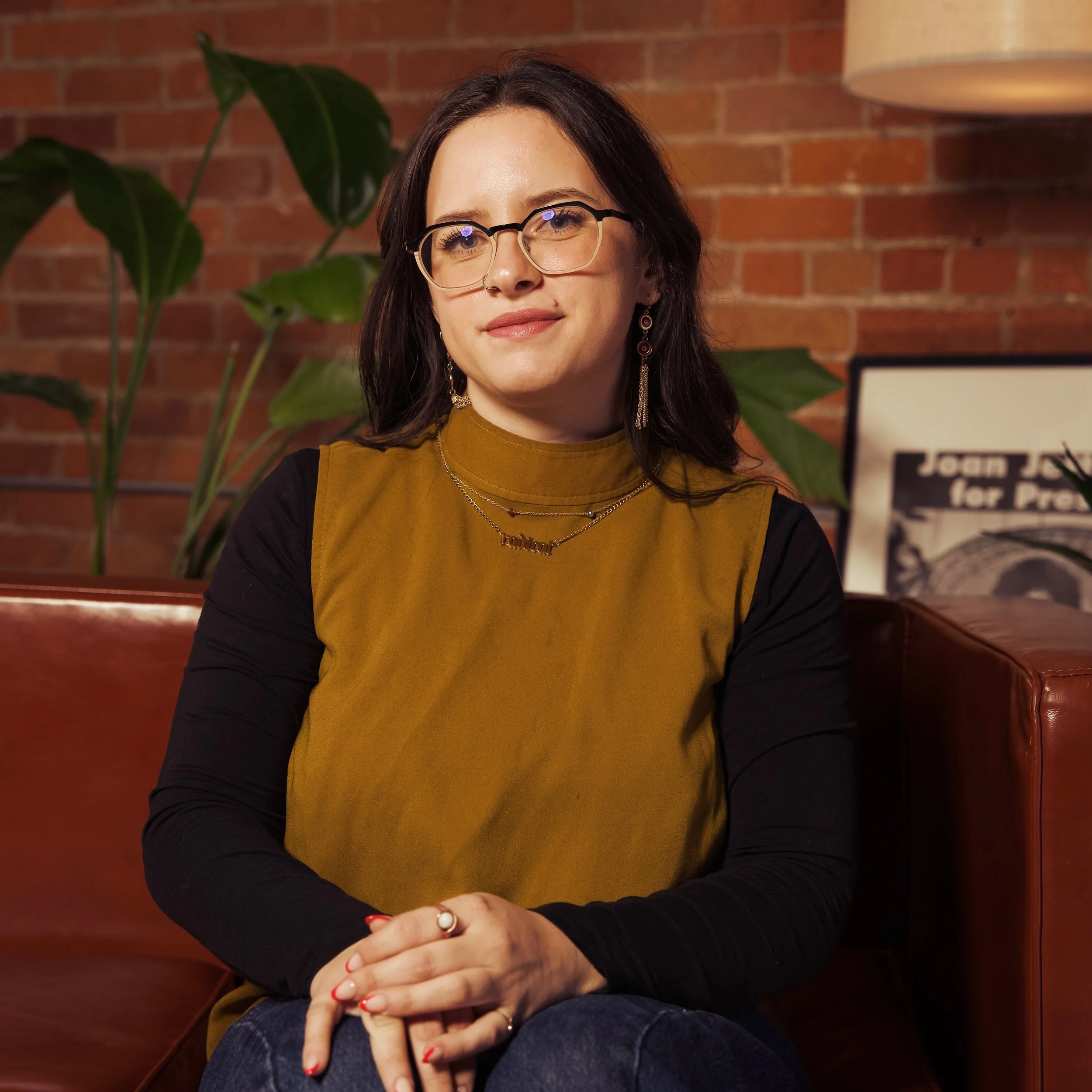
Shayla Zimmerman
Host, Producer
Shay is a Detroit-based community organizer, storyteller, and activist whose work centers community power, collective care, and everyday acts of resistance. From leading regional climate resilience and water justice initiatives to building grassroots emergency response efforts on Detroit’s East Side, she uses her platform to amplify grassroots voices.
SOURCES & FURTHER LEARNING
https://unsplash.com/photos/a-statue-of-a-fist-is-suspended-by-a-crane-xs1W9DoYEVs
https://geezmagazine.org/magazine/article/waawiyatanong-land-acknowledgement
https://www.detroithistorical.org/learn/online-research/encyclopedia-of-detroit/parks-rosa
https://www.detroithistorical.org/learn/online-research/encyclopedia-of-detroit/race-riot-1943
https://urbanhistory.willmackintosh.org/project/madelines-project/
https://naacp.org/find-resources/history-explained/1963-march-washington
Freedom is a constant Struggle by Angela Davis
https://www.detroithistorical.org/learn/online-research/blog/remembering-mlks-influence-detroit
full episode transcript
Shay: Hey, what up doe. Welcome to the very first episode of Radicals for Good - a podcast about the quiet revolutions unfolding around us. I’m here at Peny Detroit studios, sending gratitude to them for letting us use their space today. I’ll be honest, I have a bit of a cold but the revolution doesn’t take breaks so here we are.
In this episode, I’m going to share some radical introductions to this podcast, to myself, and to Detroit. We often think of radicalism as megaphones, marches, and hostile takeovers but truly the most radical actions of all are everyday decisions and actions that challenge destructive systems and center humanness.
Radicals for Good is recorded on Waawiyaataanong, the lands of the Anishinaabe* peoples whose presence and resistance continue today. Detroit’s history of rebellion is rooted in Black labor, Indigenous survival, and community struggle. We acknowledge those whose resistance made and make this city possible.
My name is Shayla Zimmerman, I’m the host and producer of Radicals for Good. I’m a Detroit-based community organizer, conversationalist, and an activist. My work centers around building community power, collective care, and everyday acts of resistance. I first started community organizing when I was only 15-years-old. From leading regional climate resilience and social justice initiatives to building grassroots flooding response efforts to violence intervention with young people on Detroit’s East Side. My purpose is to uplift grassroot voices while caring for neighbors, and I take that very seriously - which is why this podcast exists.
In our first episode, we begin in my hometown, the most radical city in the United States - Detroit, Michigan.
Detroit Introduction
[sound cue: low hum of Detroit traffic, street music, Detroit protests and speeches]
For us to truly dive into ways we can take radical action every day, we need to go back in time in order to make connections to the present moment and the future - especially in a city like Detroit.
Detroit has always been radical. Detroit’s history is a story of strength, resilience, protection, and deep love.
In 1925, armed white mobs attacked homes of ‘well off’ Black neighbors who pushed the boundaries of racial segregation in Detroit. Many police officers sided with these mobs and the Ku Klux Klan, shooting over 55 Black people in that summer alone. Meanwhile, the Ku Klux Klan held a rally with over 10,000 attendees to continue to redline and confine Black communities into small, yet powerful, divisions of the city. Many of these conditions led up to a race rebellion in 1943 and trickled for decades afterwards.***
In the 1940s, Black workers at the Ford River Rouge Plant organized, making it one of the most important strikes during the Great Depression. After months of unethical firings and the union building power within the plant, the rolling mill workers stopped working on April 2nd and within only 9 hours, the entire plant was shut down. Tens of thousands of workers began picket lines, and workers positioned their cars to block all entrances to the plant. On April 7, 1941, Ford accepted the terms of the union strikers.*
In the 1960s, we had Rosa Parks*, Dr. Martin Luther King Jr., and Brother Malcolm X organizing and leading the civil rights movement. Marching down Woodward with over 125,000 people with the intention and the victory of ending segregation.*
And in 1967, a rebellion that shaped our city forever — not a “riot,” but a response to police brutality, housing inequality, and generational racial violence.
It was a response to decades of violence against Black communities. This rebellion took place during a time when Detroit residents were 40% Black, but only 5% of the local government and police force. Shortly before this 4-day rebellion, several Black residents were fatally shot by police in a "routine police raid of an after-hours club”. In most accounts, the “race riots” we hear about from 1967 were a buildup of significant wealth inequity and racial violence.**
There are so many other examples I could give you in this episode, but I want you to leave with this. Our dynamic and radical history radiates through our city streets and continues to be felt even in this present moment. It encourages all of us to take a critical stance towards collective good for all Detroiters.
Dr. Angela Davis teaches us that “Regimes of racial segregation were not disestablished because of the work of leaders and presidents and legislators, but rather because of the fact that ordinary people adopted a critical stance in the way in which they perceived their relationship to reality.”*
Sometimes radicalism is loud.
But often it’s not. It’s soft. Slow. and disciplined.
It’s a refusal to accept the harm we see in the world as it is.
It’s choosing solidarity over safety. Connection over convenience. And I think it’s important we start this podcast in my hometown because Detroiters - well we do this every single day.
We plant gardens in empty lots.
We start block clubs that become lifelines during times of crises, like flooding.
We make music that tells the truth.
We build economies outside of traditional systems.
We love each other out loud, even when the world says we’re no good.
Podcast Introduction
Mama Grace Lee Boggs asks us to tell the time on the clock of the world, which is why it is so incredibly important that we are always connecting history to the current moment.
I had a chance to share space with expansive thinkers and change makers for a little over a year during a fellowship. This experience was transformative for me; there are things we discussed that will forever sit with me.
During one of our sessions, while discussing the civil rights movement and the radical leaders in that movement, our cohort leader shared with us that these leaders were actually incredibly disciplined; the civil rights movement was very strategic. And that’s what made it so powerful.
Often in public school, we’re taught to think about someone like Rev. Martin Luther King Jr. as a leader who led marches and advocated for civil rights; he was so much more than that.
He was someone who was strategic, thoughtful, deeply connected in community, and made choices every single day that led him to make big change.
I’m gonna share this bit of knowledge too. In order to get us to remember the definition of revolution, my high school history teacher would repeat - revolution is BIG change in a small amount of time. Which is true. BIG actions like protests and revolts can create big change in a small amount of time, but it’s very, very likely that those too were strategic, well-thought-out, and coordinated efforts. Which leads me to believe that most revolutions are actually small changes over big (or a long) time. It’s about the long game, too.
In our first season of Radicals for Good, we’re keeping ourselves at home base here in Detroit and we’re talking with folks who are making big change in small moments.
A liberation coach who created a pollinator garden in her front yard.
A young tech developer who is changing the way we think about voting.
A gardener who is changing the way we distribute food to neighbors.
A journalist standing in solidarity across the globe.
A community organizer building a solidarity economy.
A cognitive behavioral therapist who can teach us how to sustain and heal during times like these.
In each episode, I’ll keep asking our guests:
How do we make resistance into a practice?
And what does it look like to live a radical life - one action or decision at a time?
Grow & practice
I’ll also ask you, our listener, to step outside of your comfort zone and take small actions towards collective good - including ways that you can learn more about topics discussed during the episode and ways that you can build this resistance muscle. I have two small actions for you today that can potentially bring big change:
First, follow our journey! Please like this episode and subscribe to Radicals for Good on Substack or our website at radicalsforgood.com. Follow us on Instagram and YouTube at @radicalspod.
And if I’m telling the radical truth - We are launching this podcast at a very vulnerable and dangerous time. Our freedoms are being threatened, and people are being censored for speaking their mind. It takes a lot of bravery and resilience to speak out right now. As a listener, I ask you to honor that, send your love and light to our guests and co-hosts, support through a paid subscription, and contribute to guests’ efforts. Creators are sustainers and healers through the movement too. It only works if you’re actively listening and being a part of this community.
Second, as you were listening, you probably thought about someone making big changes in small moments. Send this episode to them and talk about it! Content is only useful if we’re using it to connect to one another. Revolutions only work when we’re in connection and community with each other. And if you have an idea for an episode or a guest speaker, I’d love it if you could email us your radical idea at hey@radicalsforgood.com.
Closing
[outro music]
Thank you for being with me today. Please follow our first season and send this episode to the person you thought of.
And remember the revolution may not always be televised. But it might be in your backyard or even within yourself.
Sending my deepest gratitude to Daniel, our music producer, Ria and Jonah at Peny Detroit, Janae and Jourdan, my thought partners, and all my other co-liberators for helping bring this podcast to life.
You can find links and sources in the show notes as well as a full transcript of this episode.
Peace and blessings!
[outro music]
sources & further learning
https://unsplash.com/photos/a-statue-of-a-fist-is-suspended-by-a-crane-xs1W9DoYEVs
https://geezmagazine.org/magazine/article/waawiyatanong-land-acknowledgement
https://www.detroithistorical.org/learn/online-research/encyclopedia-of-detroit/parks-rosa
https://the-spark.net/o_ford1941.html?utm_source=chatgpt.com
https://www.detroithistorical.org/learn/online-research/encyclopedia-of-detroit/race-riot-1943
https://urbanhistory.willmackintosh.org/project/madelines-project/
https://naacp.org/find-resources/history-explained/1963-march-washington
Freedom is a constant Struggle by Angela Davis
https://www.detroithistorical.org/learn/online-research/blog/remembering-mlks-influence-detroit
